Case Study
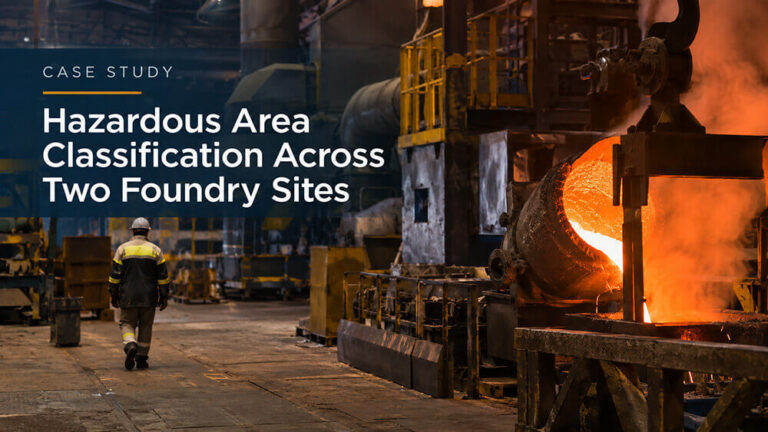
Hazardous Area Classification Across Two Foundry Sites

The Site
A steel foundry operating across two production sites, with more than 20 distinct process areas between them. Combustible wood dust in the workshop. Flammable liquid coatings on the finishing line. Natural gas distribution feeding multiple points. Several storage areas holding flammable materials. Some areas also handled insulating materials, bringing electrostatic discharge into the assessment.
Each area had its own hazard profile and existing controls. The assessment therefore needed to work through the processes individually rather than assume that conditions or classifications in one part of the facility applied elsewhere.
Scope
The client needed hazardous areas identified and classified across both sites, along with practical recommendations for managing the conditions found during the assessment.
Sigma-HSE carried out the multi-site assessment across more than 20 operational areas, covering gas, vapor, and combustible dust hazards.
Assessment Method
Each area was evaluated for the likelihood and persistence of an explosible atmosphere.
Potential ignition sources were reviewed area by area, including electrostatic discharge, mechanical sparking, electrical equipment suitability, and hot work.
Process interactions and existing controls were considered alongside the hazardous area classification. Gas, vapor, and dust hazards were evaluated based on the materials, equipment, and operating conditions within each area rather than applying a blanket classification across the site.
A basis of safety was documented for each applicable process and area, covering both normal and abnormal operating conditions.
Findings and Recommendations
The assessment produced more than 60 recommendations across the two sites.
Corrective actions: Wood dust accumulation in the workshop, propane storage arrangements, cylinder separation, and material storage practices were among the conditions identified for correction.
Static control: Recommendations addressed footwear, clothing, flooring, grounding, and other measures for controlling electrostatic ignition hazards.
Ventilation and equipment: Ventilation and local exhaust ventilation requirements were reviewed by area, along with the suitability of equipment used within classified locations.
Work practices and inspection: Safe Systems of Work and regular inspection schedules were recommended for relevant operations.
U.S. Standards and Guidance
For US facilities with a similar mix of hazards, several NFPA standards may be relevant, including.
NFPA 497 addresses the hazardous area classification of locations involving flammable gases and vapors.
NFPA 499 addresses the hazardous area classification of locations involving combustible dusts.
NFPA 77 addresses static electricity and associated ignition hazards.
NFPA 30 covers the storage, handling, and use of flammable and combustible liquids.
NPFA 660 addresses the housekeeping, dust hazard potentials, and equipment requirements.
The standards and requirements applicable to a facility depend on the materials, processes, equipment, and operating conditions present.
Result
The client received documented classifications for the applicable areas across both sites, supported by more than 60 recommendations tied to conditions identified during the assessment.
The site teams had a defined list of corrective actions, equipment and control requirements, and ongoing inspection measures to work through across the two facilities.
The assessment also gave the client a documented basis for understanding why individual areas were classified as they were and what controls needed to be addressed.
Running a Multi-Site Operation with Mixed Hazards?
Sigma-HSE conducts hazardous area classification assessments for facilities handling combustible dusts, flammable gases, vapors, and other materials capable of creating hazardous atmospheres.