What Does a Process Safety Consultant Do?
Industrial facilities that handle hazardous chemicals or that have complex processes often need specialized support to identify hazards, evaluate risk, and maintain effective process safety management systems. A process safety consultant brings technical knowledge and an outside perspective to these tasks, helping internal teams examine how processes are designed, operated, changed, and maintained.
A process safety consultant’s work can include hazard analysis, program reviews, regulatory compliance support, and practical recommendations for reducing risk. For safety managers, EHS leaders, plant managers, and engineering teams, consulting support can also add expertise during projects that require focused process safety knowledge or additional resources.
What Does a Process Safety Consultant Help With?
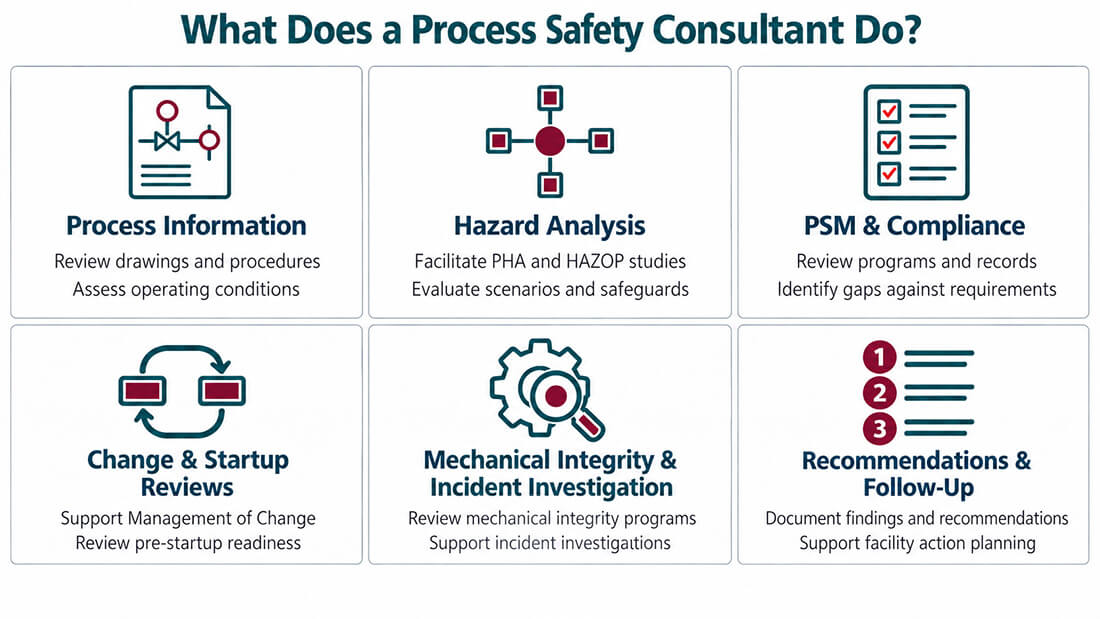
A process safety consultant can support program development, hazard analysis, audits, incident investigation, and training. The exact scope depends on the process, hazards, regulatory requirements, and the capabilities already available within the organization. Common areas of support include process safety management program development and review, hazard analysis, mechanical integrity, Management of Change program support, Pre-Startup Safety Reviews, compliance audits, incident investigation, emergency planning, and process safety training.
Consultants may also help teams organize process safety information, review procedures, identify gaps, and prioritize recommendations. The goal is to combine that knowledge with technical experience so the organization can make better-informed decisions about hazards, controls, and program improvements.
That support can occur at different points in a facility or project lifecycle. During design, a consultant may help teams identify hazards before equipment and procedures are finalized. During operations, the focus may shift to audits, evaluating the hazards associated with process changes, training, or review of existing safeguards and controls. During shutdowns, expansions, or startups, consulting support can help teams examine how planned changes affect process safety and what needs to be addressed before the process returns to service.
Process Hazard Analysis and Risk Assessment
Process Hazard Analysis (PHA) is a central part of many process safety programs. A consultant may facilitate a PHA using various methods, such as HAZOP or What-If analysis, to help a multidisciplinary team identify credible hazard scenarios, evaluate existing controls, and document recommendations. The analysis should reflect the actual process, equipment, materials, and operating conditions rather than rely on a generic checklist. Consultants can also help organize findings so the facility can prioritize actions and track follow-up work within its broader process safety management activities.
When Might a Facility Need a Process Safety Consultant?
A facility may need a process safety consultant when a facility is developing or reviewing a process safety management program, preparing for a compliance audit, modifying a covered process, or conducting or revalidating a PHA. A consultant may also be brought in when an internal team needs specialized support for mechanical integrity, hazardous area classification, combustible dust hazards, reactive chemical hazards, or incident investigation.
Another common reason is capacity. Process safety work often requires participation from operations, engineering, maintenance, and EHS personnel who already have full-time responsibilities. A process safety consultant can provide focused technical support while working with the people who understand the facility and its operating history.
How Consultants Support OSHA PSM and Regulatory Compliance
For facilities subject to OSHA Process Safety Management requirements under 29 CFR 1910.119, consultants can help evaluate how existing programs, procedures, and documentation align with applicable requirements. That work may include reviewing process safety information, PHA practices, operating procedures, mechanical integrity programs, Management of Change processes, Pre-Startup Safety Reviews, training, incident investigation, and audit practices.
Regulatory compliance is only one part of the work. A useful review also considers how the program functions in day-to-day operations. Written procedures need to reflect actual practices, findings need clear ownership, and process safety information must remain up-to-date as equipment and processes change. By identifying gaps and helping teams prioritize next steps, consulting support can strengthen both compliance efforts and the practical operation of the process safety management system.
Periodic audits and program reviews can also show where written requirements and field practices have drifted apart. Consultants can help organize those findings, distinguish immediate concerns from longer-term improvements, and support teams as they update procedures or documentation. This keeps the focus on a process safety management system that can be maintained as facilities, equipment, and operating conditions change.
What to Expect When Working with a Process Safety Consultant
A process safety consulting engagement typically begins by defining the scope and gathering relevant process information. Depending on the assignment, the consultant may review drawings, safety data sheets, operating procedures, previous studies, incident records, inspection information, or existing process safety documentation. Facility personnel then provide the operating knowledge needed to understand how the process works in practice.
The consultant may facilitate workshops, conduct interviews, review documentation, or perform site evaluations. Findings are then organized into technical observations and recommendations that the facility can evaluate and prioritize. Follow-up may include clarification of findings, support for action planning, or additional technical work as needs are identified.
Choosing the Right Process Safety Consultant
The right consultant should have experience with the hazards, processes, and standards relevant to the facility. For work involving OSHA PSM, that includes an understanding of process safety management requirements and the technical disciplines that support them. Experience facilitating PHA studies is also valuable when HAZOP, What-If, or other structured methodologies are part of the scope.
Technical knowledge should be paired with clear communication. A consultant needs to work effectively with operations, engineering, maintenance, and EHS personnel while documenting conclusions in a way that supports practical decision-making. Industry experience can also help the consultant recognize common process safety issues without treating every facility as if it operates the same way.
It’s also useful to understand how the consultant approaches scope, documentation, and follow-up. Clear expectations at the start of an engagement can help both sides define responsibilities, identify the information needed, and agree on how findings will be communicated to the people responsible for process safety decisions.
Working with Sigma-HSE on Process Safety
Sigma-HSE supports industrial organizations with process safety consulting, Process Safety Management, Process Hazard Analysis, HAZOP and HAZID studies, Hazardous Area Classification, Dust Hazard Analysis, consequence modeling, and related laboratory testing. Our technical team works with facility personnel to evaluate hazards, identify gaps, and develop practical recommendations based on the process and operating environment.
If your organization needs support with a specific study or a broader process safety management challenge, contact Sigma-HSE to discuss the scope and next steps.